Introduction
Categoty:
Social Media
Role:
Product Designer
Year:
2020
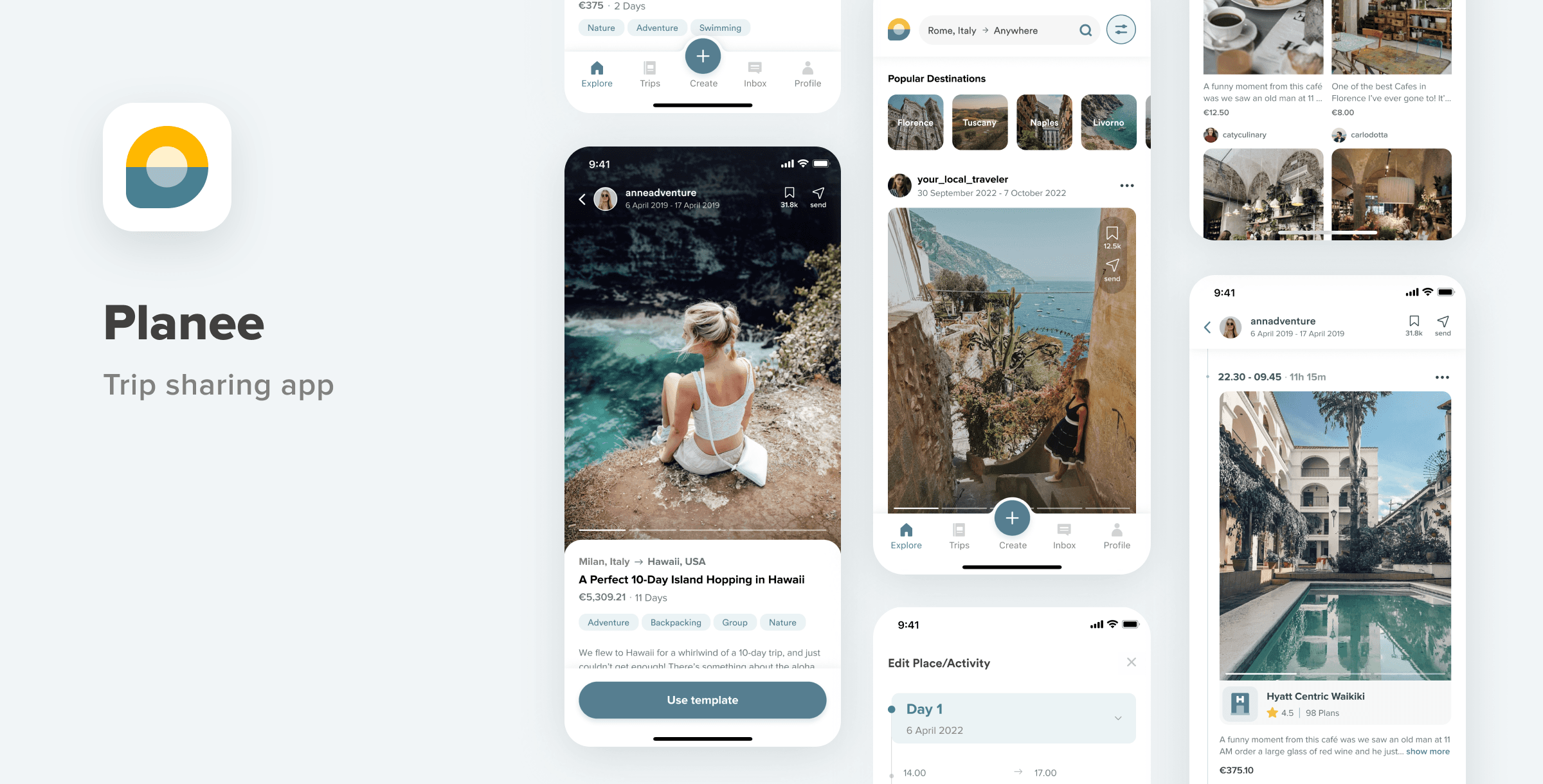
Planee is a travel social media platform where people share real itineraries that others can use, adapt, and make their own.
The product explored how shared travel experiences from social media and blogs could become reusable trip plans tailored to different users.
Planee was a real product in active development, paused when COVID made travel planning irrelevant overnight. This case study covers the full design process from research to tested prototype.
Design Process

User Research
Travelers rely on multiple disconnected tools (notes, maps, spreadsheets)
Existing apps focus on planning OR organizing, but rarely allow their users to do both
Most itineraries are not reusable and are not structured in an easy-to-use way
Travel inspiration exists, but is hard to translate into actionable plans
From user research (20+ travelers)
User Personas
Based on the user research, I created two user personas that represent two kinds of travelers:
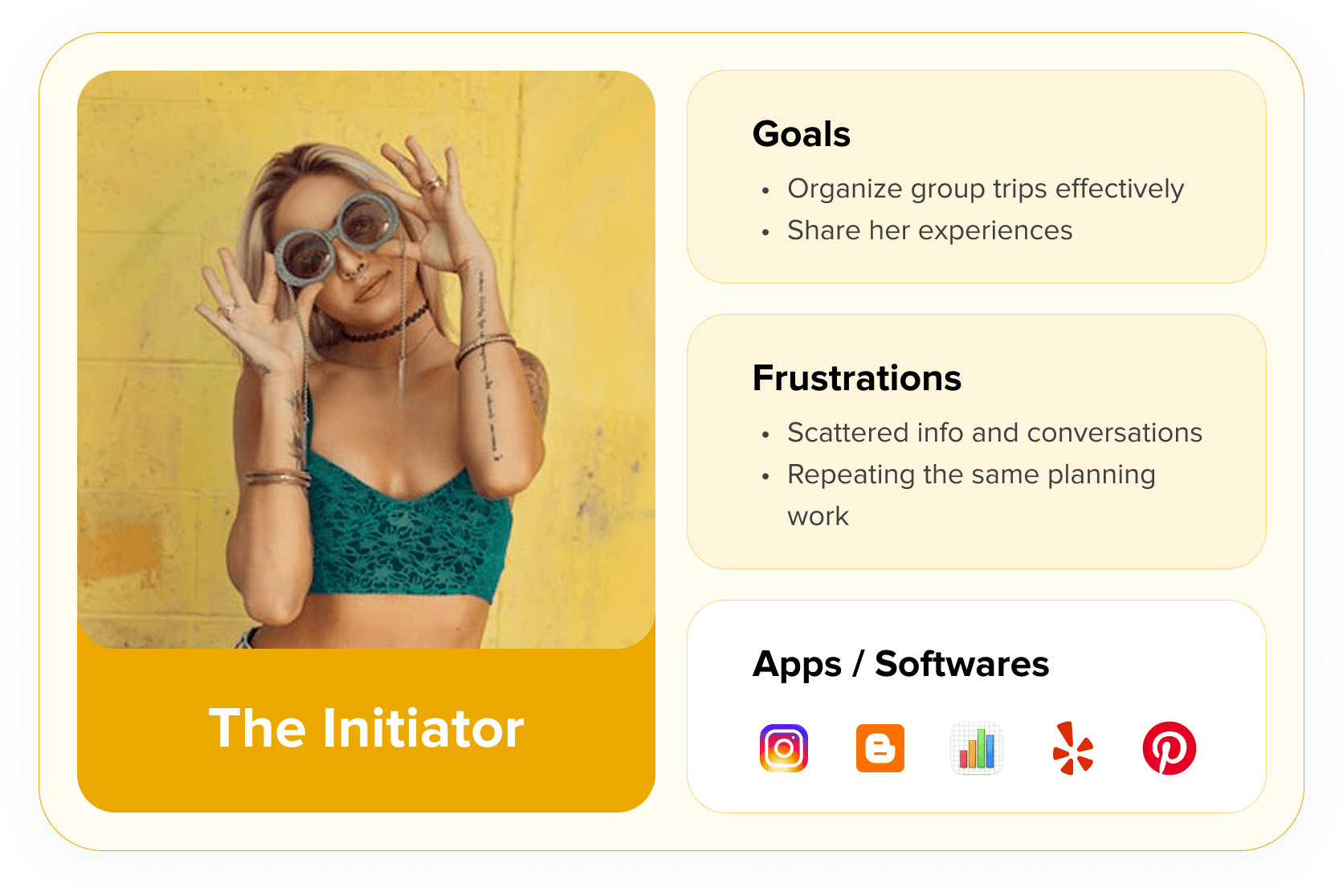
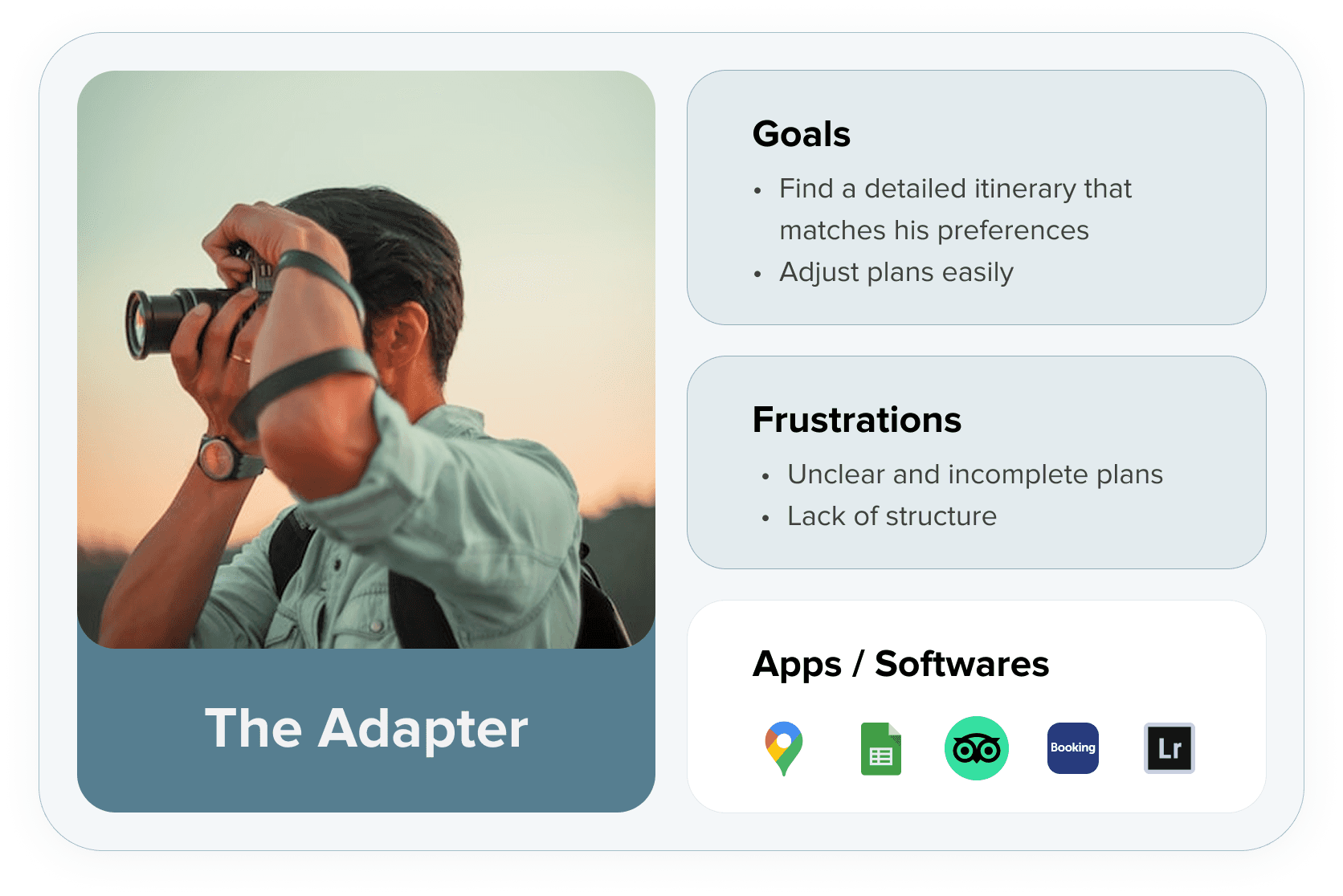
The two personas revealed a two-sided dynamic:
the Initiator creates and shares,
the Adapter discovers and adapts.
Every major design decision came back to serving both without making either feel like a second-class user.
Customer Journey Map
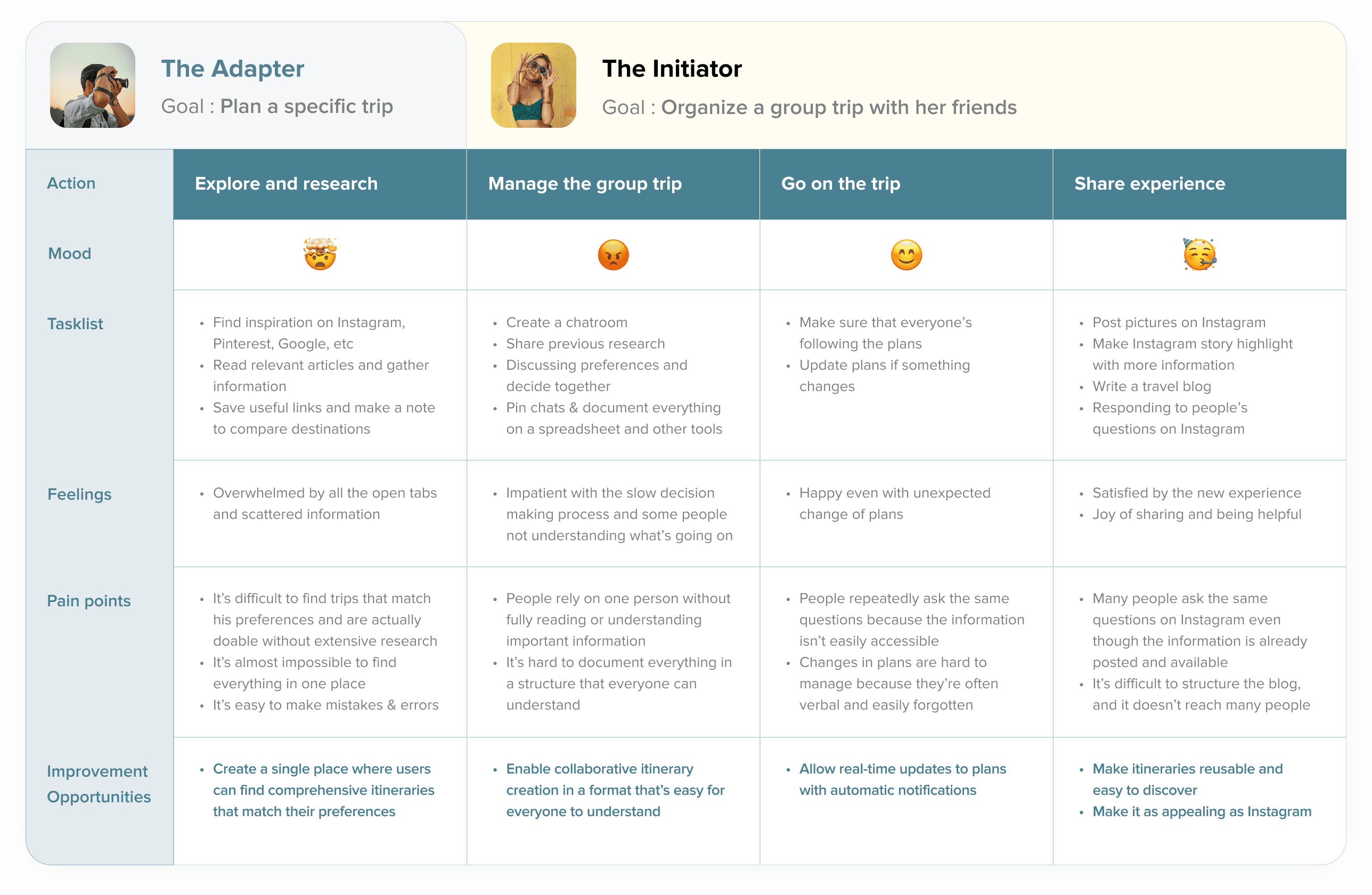
The journey map made one thing clear:
the most painful moment for both users was the same: the gap between scattered inspiration and a structured plan they could actually act on. That became the product's primary job to solve.
Travel planning is often fragmented and time-consuming.
While users constantly discover travel ideas through social media, blogs, and saved content, these sources are not structured for reuse. As a result, users have to manually organize information and rebuild itineraries from scratch.
Transform scattered travel inspiration into structured, reusable itineraries.
By enabling users to explore trips created by others, adapt them to their needs, and contribute their own, the platform reduces the effort of planning while creating a system of shared travel knowledge
Competitive Audit


Itinerary and map in one view
Route optimization for better efficiency

Hard to find trips that match your preferences
Public trips lack expenses and transportation details

Inbox Sync: adds plans from your inbox
Provides airport and terminal maps for navigation
Focused on organization rather than trip planning
Too many forms and input fields

Displays attractions, hotels, restaurants, and shops directly on the map
Time estimates for each location
Limits trip suggestions primarily by duration
Does not support sharing or viewing other travelers’ experiences

Itinerary and map in one view
Automatically populates added plans with relevant information
Does not include transportation or accommodation details
Does not include expense tracking
Every tool solved one part of the problem in isolation. None connected inspiration to action in a single place.
That gap became Planee's core opportunity:
not another planning tool, but a bridge between seeing a trip and actually planning it.
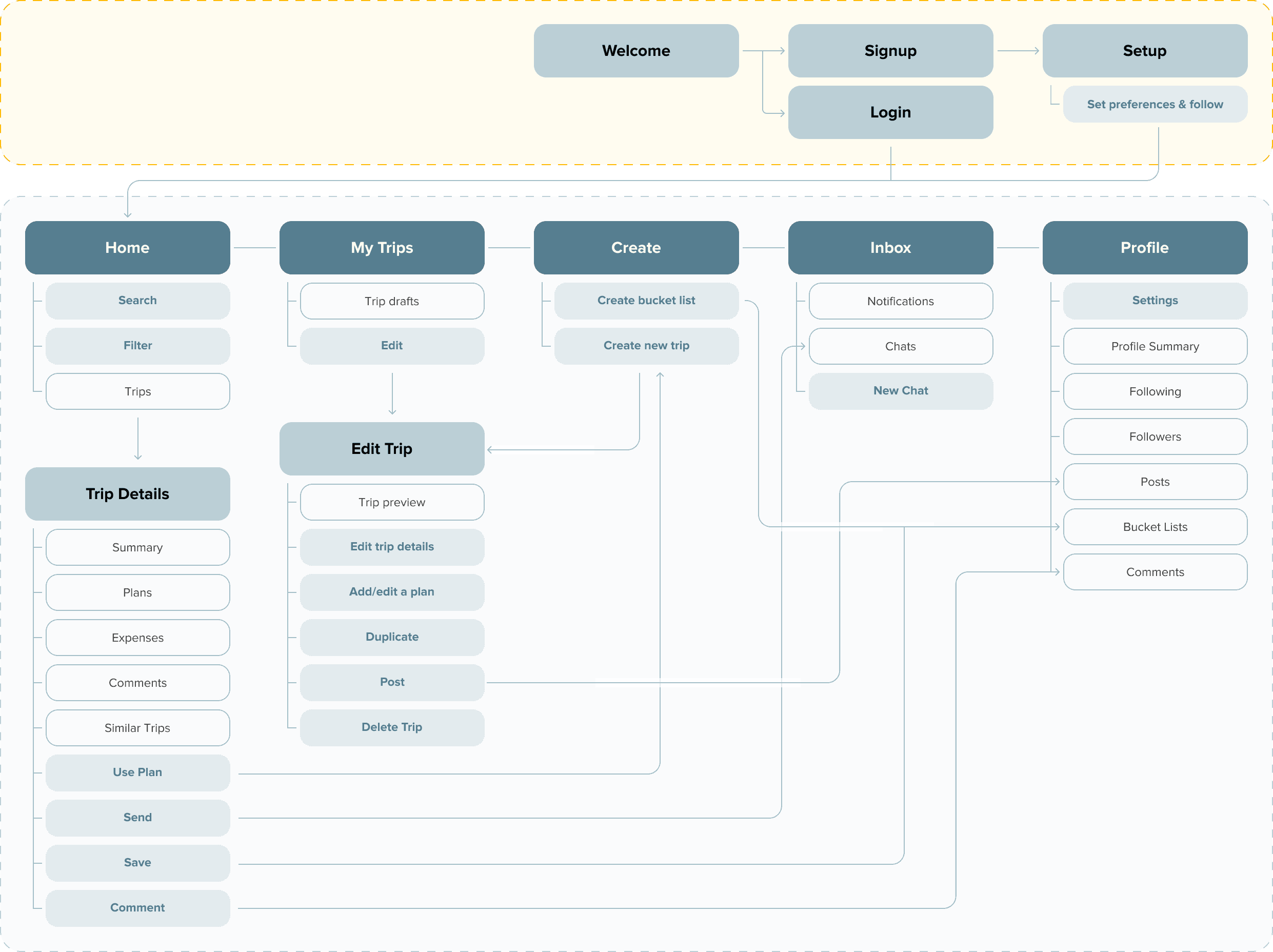
Information Architecture
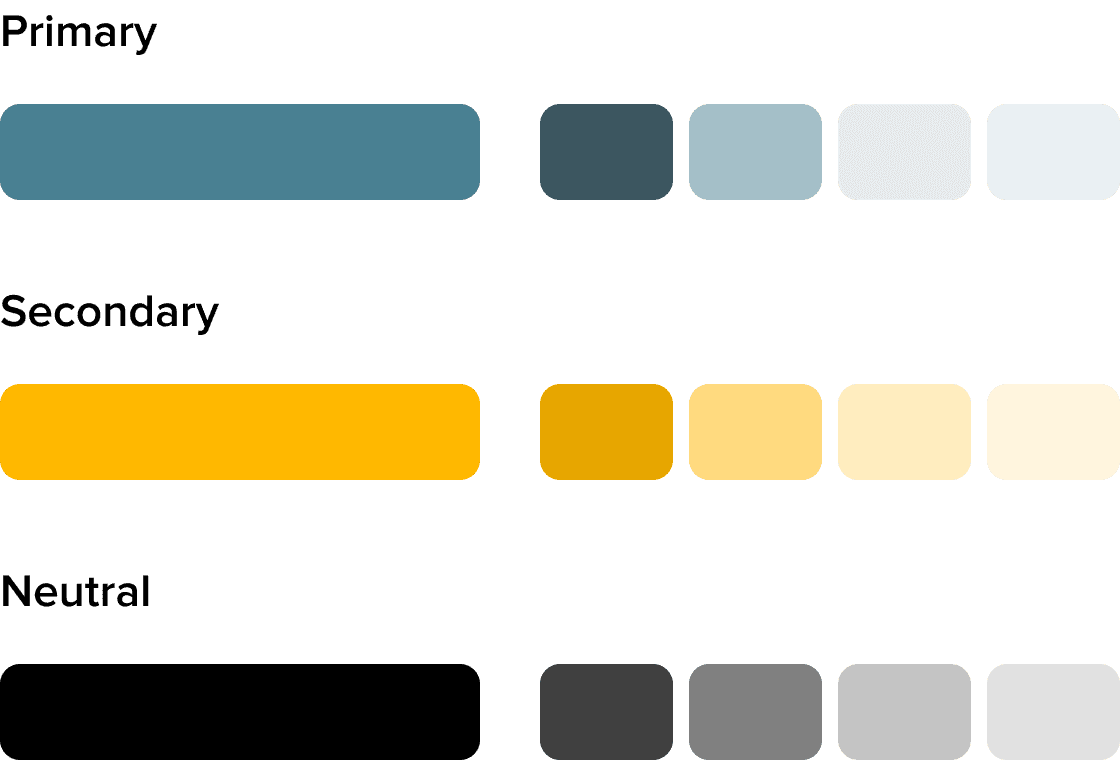
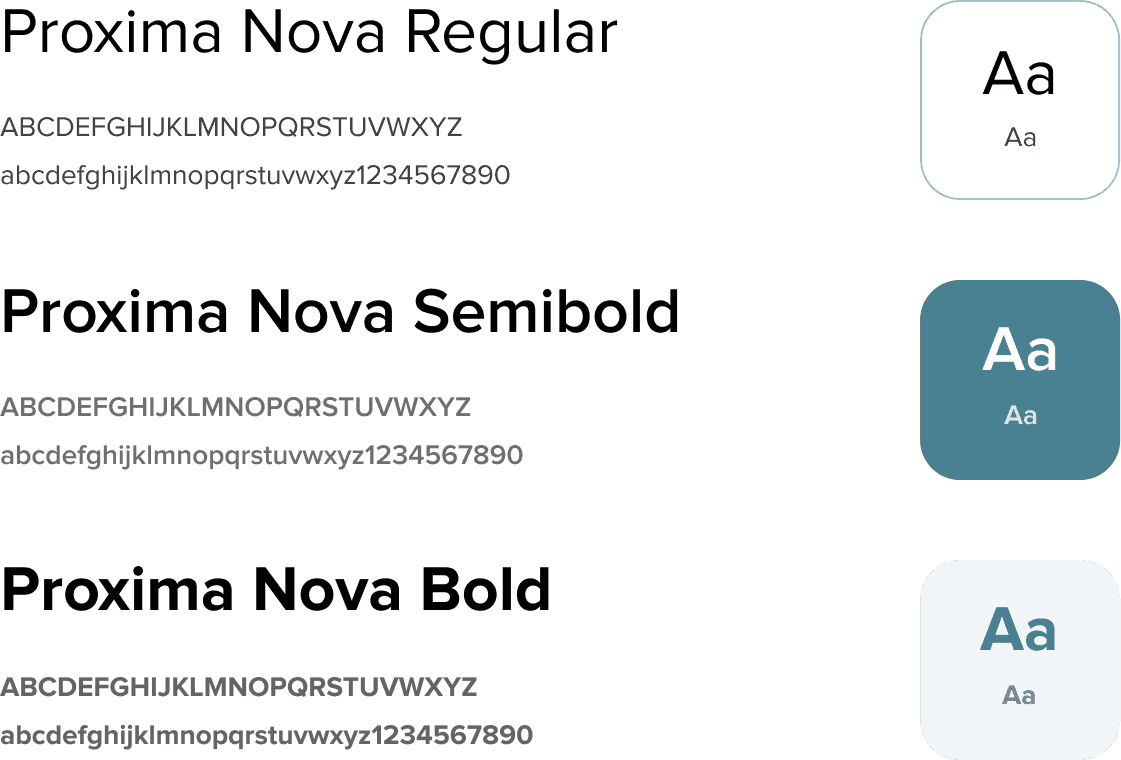
Style Guide


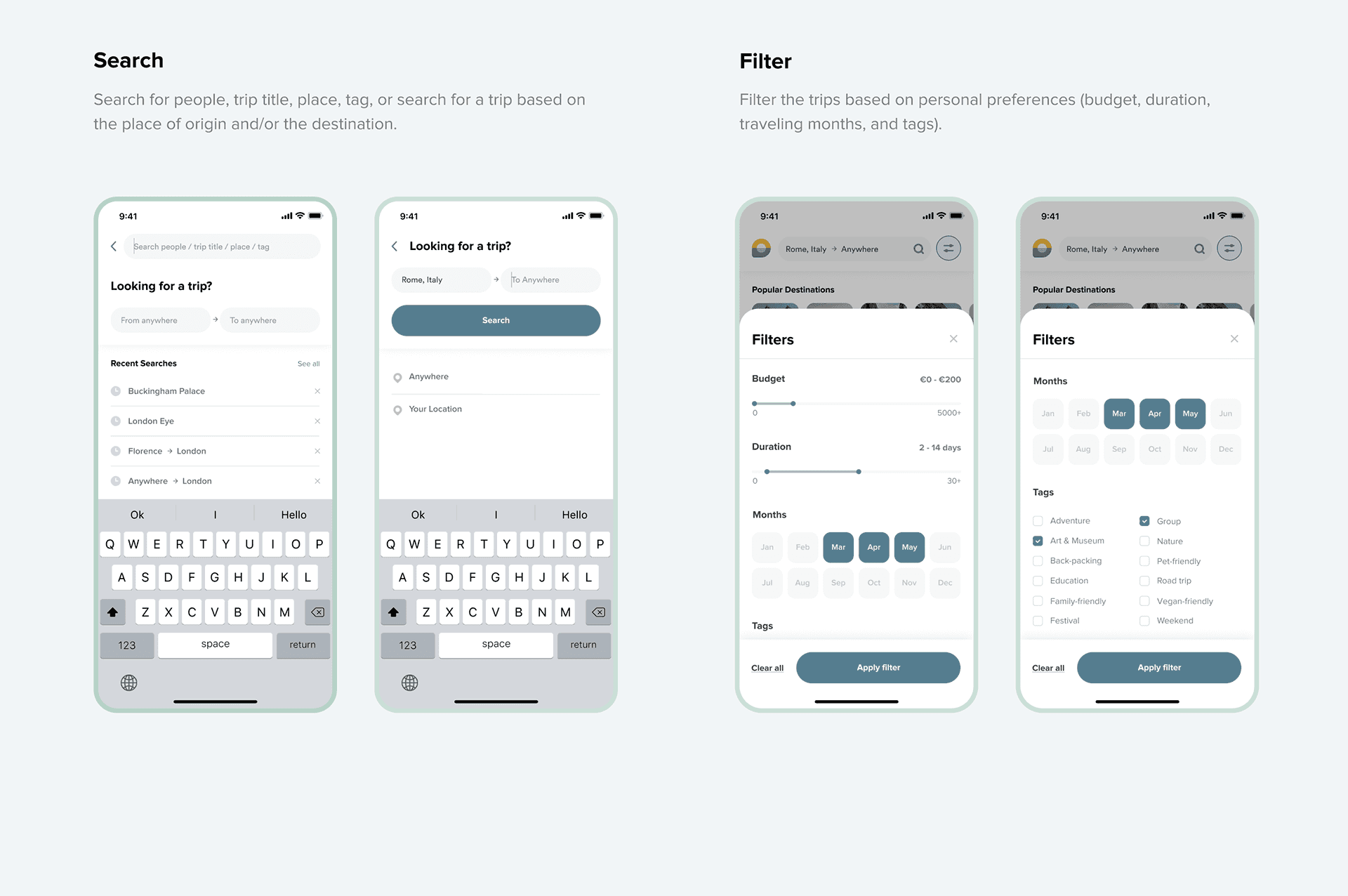


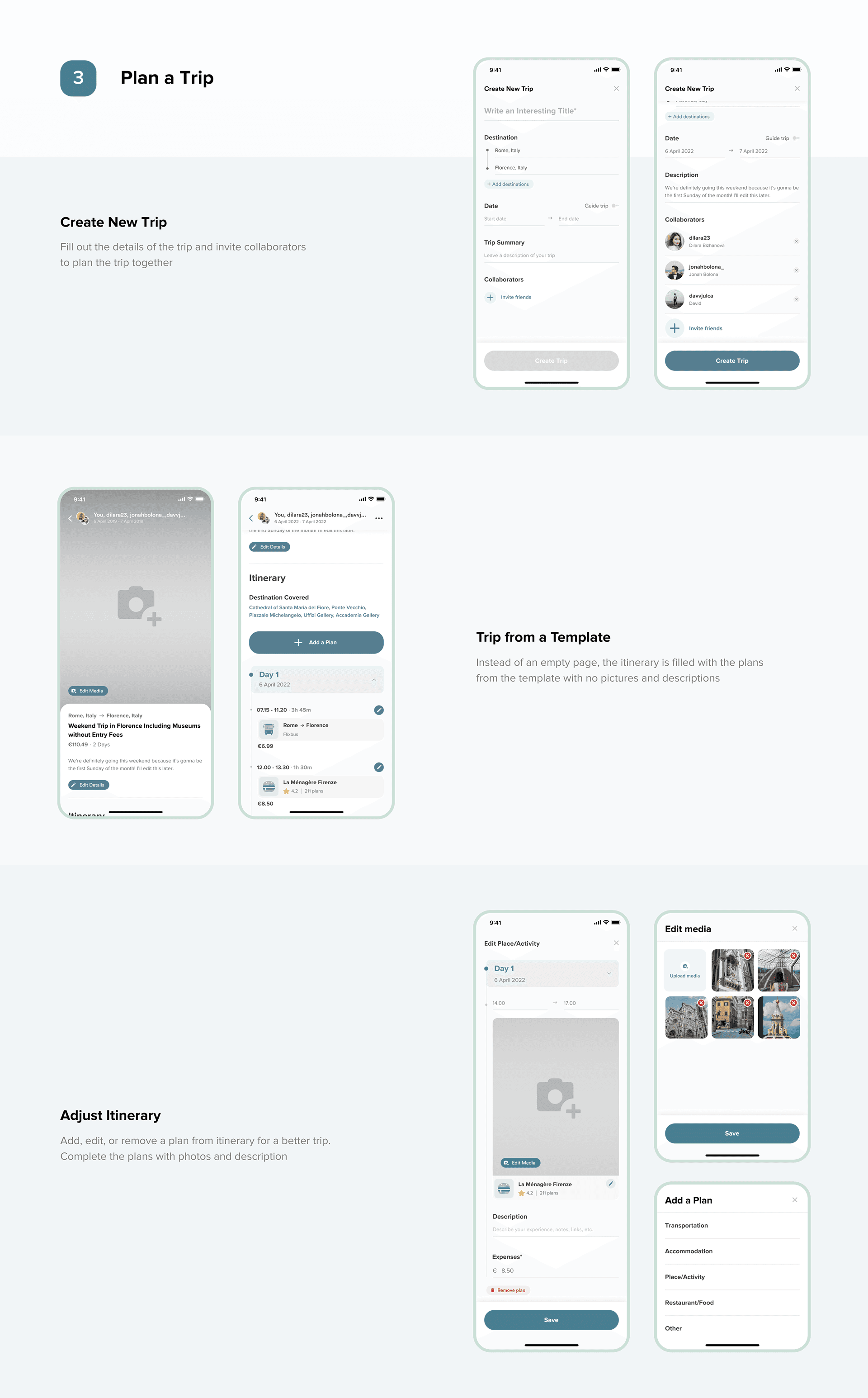

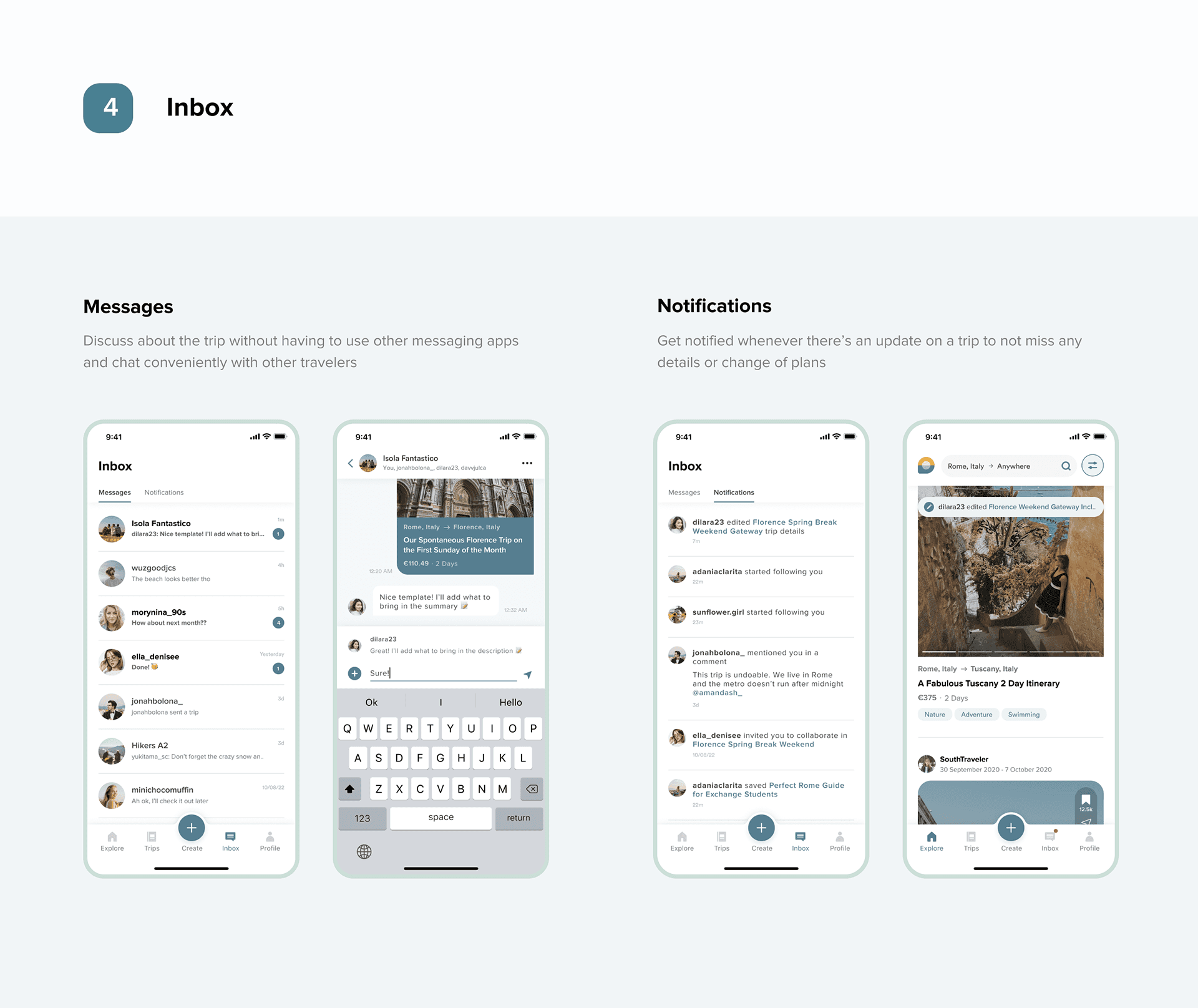


Usability Testing
Moderated usability testing was conducted with 8 travelers (aged 21–28) using a Figma prototype on iPhone XS.
8/8 were able to complete all tasks and find the interface familiar and intuitive.
Familiar interaction patterns reduced learning time and supported quick task completion.
3/8 would love to see the itinerary in a map view for a better understanding of the routes.
Introduce a map view toggle to help users better understand routes and spatial context.
2/8 need very specific trip tags that are not on the list (concert, gluten-free)
Preset tags are limiting. Allowing custom tags would better support diverse travel needs.
1/8 needs a feature to upload personal attachments such as tickets and reservations.
Attachment uploads emerged as a potential need but require further validation.